Start under the palms
Al Ain Oasis is a working agricultural landscape with shaded paths and a traditional falaj irrigation system. It is best approached as a place to walk slowly, not as a quick viewpoint. We would start in the morning, when a longer walk is more comfortable.
Stick to visitor routes and respect working plots. Shade does not remove the summer heat, so shorten the walk and make room for an indoor visit in the hottest months.
Choose a fort and something smaller
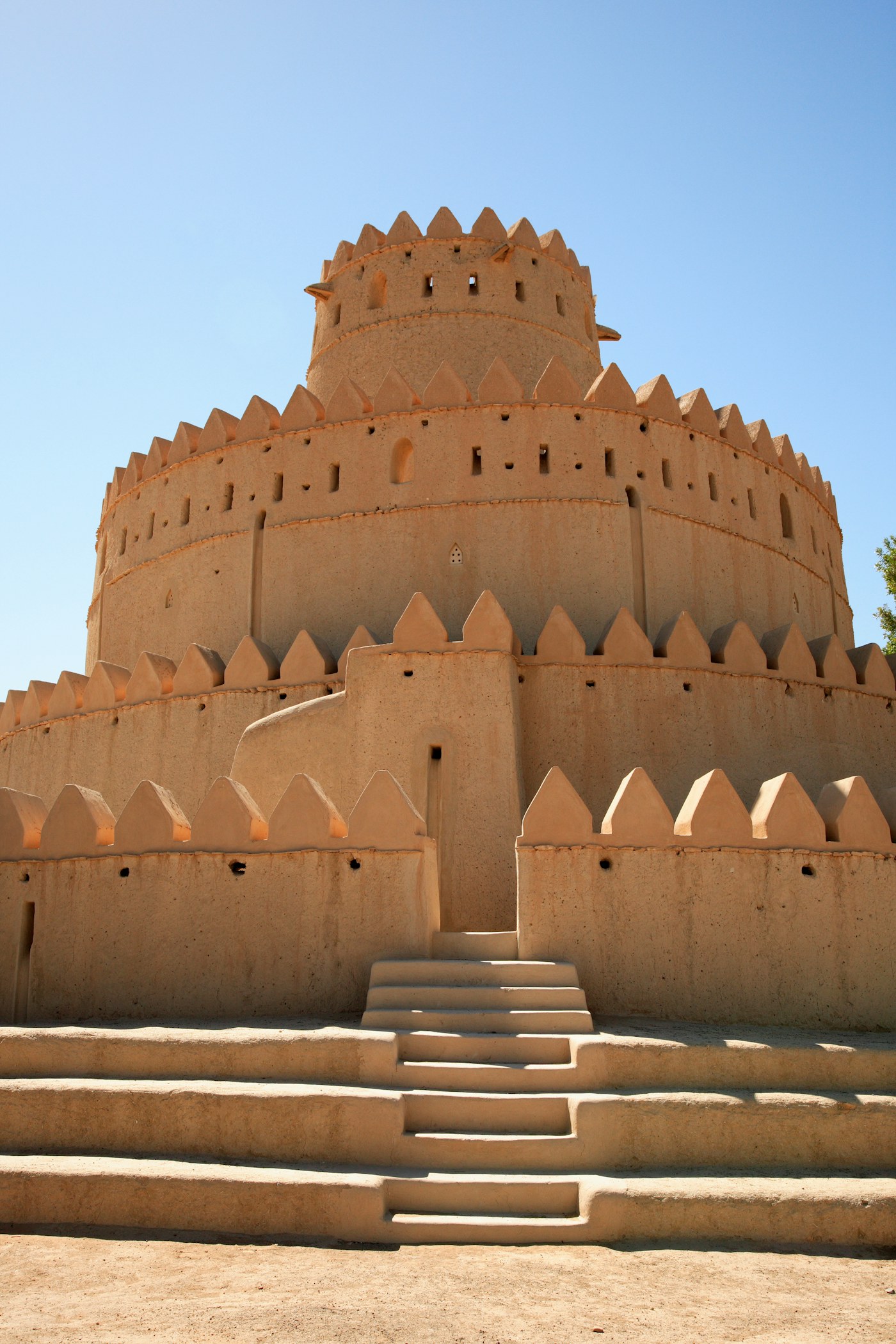
Al Jahili Fort and Qasr Al Muwaiji offer different routes into Al Ain’s history. Check the exhibitions and opening days rather than assuming both offer the same experience. Al Qattara’s arts and heritage setting is a useful quieter addition if its current programme interests you.
For a family trip, two well-spaced visits can be enough. Avoid filling the middle of the day with repeated outdoor transfers just to collect every landmark.
Jebel Hafit is a separate outing
The mountain road to Jebel Hafit takes you out of the city for broad views. Green Mubazzarah sits at the mountain’s base. Plan the drive in daylight, check road conditions and return before you are tired; a mountain viewpoint is not a marked hiking route.
Al Ain fits between Abu Dhabi and the east coast in our two-week itinerary. Use a car or arranged transfer for this part of the route. For an even quieter desert stay, compare Liwa, but allow additional travel time rather than treating it as a nearby detour.
Sources
Check current timetables, opening hours and offers with the operator.